|
1 registered members (carmine),
1,095
guests, and 2
spiders. |
|
Key:
Admin,
Global Mod,
Mod
|
|
|
Forums48
Topics103,725
Posts1,170,159
Members1,666
| |
Most Online39,516
Apr 16th, 2026
|
|
|
 Re: Intercooler design and flow test
[Re: Saint]
#1305486
Re: Intercooler design and flow test
[Re: Saint]
#1305486
12/01/2012 08:45
12/01/2012 08:45
|
Joined: Dec 2005
Posts: 288
Germany
Stichl

Making a profit
|
Making a profit
Joined: Dec 2005
Posts: 288
Germany
|
To shorten this discussion: please read this: ClickyIn my eyes one of the best essays about intercoolers. It explains almost all questions, stated in this thread and explains differences in Bar / Plate or Fin / Pin design, tanks, pressure drop and so on... This essay is some years old and helped Jari and me to build up our own inercoolers - We chose a Garret design... Juergen
Last edited by Kayjey; 12/01/2012 12:13. Reason: Fixed the link
20VT coupegrale 4x4
|
|
|
Re: Intercooler design and flow test
[Re: Scuderia]
#1305514
12/01/2012 10:38
12/01/2012 10:38
|
group5lancia
Unregistered
|
group5lancia
Unregistered
|
I would argue that the major variables for heat transfer are surface area and the delta T parameter.
Velocity does play a role (both sides of the core), but simplified isn't velocity a fancy name for speed ? ie; distance over time ?? In the most simple heat transfer equation H=UA(Delta T) Yes Delta T is just as important as U (heat transfer coefficient) and A (area) but we can’t change it. The ambient air is what it is and the charge out of the turbo is what it is. All we can do is change U and A to get the desired air temp out the other end. U for a given flow channel design is predominantly influenced by velocity. Sure velocity is speed. However a higher speed (short residence time) will give better heat transfer than a lower speed (longer residence time) These rules are for fluid flow in a heat exchanger. A heat exchanger operates under a flow regime with a high Nusselt number. I.e. the convection of the fluid (heat transfer within the fluid) is magnitudes higher than conduction between the fluid and the boundary to the heat exchanger wall. Heating a large pot of fluid for example is a different regime (very low Nusselt) and the convection within the fluid is significant. This regime will require a long time to heat or cool. I am keen to understand this better. In the equations used here: http://excelcalculations.blogspot.com/2011/05/modeling-cross-flow-heat-exchanger.htmlDelta t (time) is important, as the resulting temperature gradient through the heat exchanger shows. Can you clarify this up for me? The ARE Cooling website (link in the above post) also mentions that if speed of charge air through the cooler is too high then cooling will be impaired. I know from experience that removing the thermostat from the engine water cooling circuit can increase running temperatures - again because the cooling water passes through the radiator core to quickly.
Last edited by group5lancia; 12/01/2012 10:52.
|
|
|
Re: Intercooler design and flow test
[Re: Saint]
#1305522
12/01/2012 11:02
12/01/2012 11:02
|
GCRE
Unregistered
|
GCRE
Unregistered
|
I read the original post and all-in-all thought it was a fun thing to try and it was presented here in an interesting way. Who knows what the member will go on to do now his interest is 'fired-up'? It wouldn't be the first time someone became enthused with scientific interest and took things to the 'next level' by study and research..
Of course forums should be good fun but, really, this thread has been so quickly slewed-off into potentially more advanced stuff where, even if some members were expert enough to present it (with the engineering credentials to understand it and stand up to robust interrogation) the discussion neither enhances nor undermines the original post.
|
|
|
Re: Intercooler design and flow test
[Re: Saint]
#1305523
12/01/2012 11:04
12/01/2012 11:04
|
tricky
Unregistered
|
tricky
Unregistered
|
Paul, that looks like a nice core. What's it's exact dimentions please ?
Do you already have a design idea for an end tank for this core, if so can you illustrate it for us in some way and how concerned about distribution are you ?
Last edited by tricky; 12/01/2012 11:26.
|
|
|
Re: Intercooler design and flow test
[Re: Kayjey]
#1305526
12/01/2012 11:21
12/01/2012 11:21
|
tricky
Unregistered
|
tricky
Unregistered
|
As I understand it, good core manufactures automaticly increase/decrease the spacing and FPI count of the turbulators (fins per inch) according to the 'xyz' dimentions of the unit. So that part of it we need not worry about too much in core selection.
|
|
|
Re: Intercooler design and flow test
[Re: ]
#1305717
12/01/2012 22:56
12/01/2012 22:56
|
16veetee
Unregistered
|
16veetee
Unregistered
|
I read the original post and all-in-all thought it was a fun thing to try and it was presented here in an interesting way. Who knows what the member will go on to do now his interest is 'fired-up'? It wouldn't be the first time someone became enthused with scientific interest and took things to the 'next level' by study and research..
Of course forums should be good fun but, really, this thread has been so quickly slewed-off into potentially more advanced stuff where, even if some members were expert enough to present it (with the engineering credentials to understand it and stand up to robust interrogation) the discussion neither enhances nor undermines the original post. Agreed, after you've done all the research you can sometimes you've just got to stick your hand in your pocket and see what you can do: 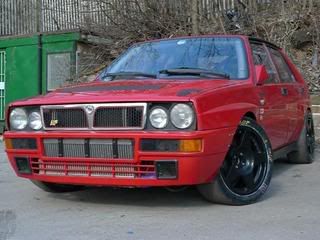 Which does work: http://www.youtube.com/watch?v=mYEyAaqBbd4Part one of a bit of an old write up here: http://deltaparts1.blogspot.com/2010/03/intercooler-theory-and-practice-part-1.htmlMore has been learned since then. Like a lot of things with cars and engines a lot of it is about your end useage, if you want a 'cooler to do everything (road, drag, track day) then you will always have to compromise one way or another, if you aim for one discipline then it becomes easier to meet a particular goal. The original coolers are fine for road use and with small power increases, but we found that they struggled under constant high temps such as a few laps of a track. On monitoring temps at 1, 2, 3 and 4 laps the temps just went up and up till they stopped at lap 4 (at about 60' IIRC) and didn't go any higher (effectively completely heat soaked), it was ok for 1 and 2. Because they are heat exchangers they work ok on the road where it is impossible to drive the car at max boost for miles on end, i.e. They get time in between bursts to be cooled by the incoming ambient air. I *think* the doubt of cooling by multiple short tubes can be countered by the fact you are sharing that heat between lots of tubes compared to less long ones, but the overall cooling area is the same, just less pressure loss. We did consider a downflow intercooler for the Coupe, but didn't do it due to the front crossmember being in the way of the outlet pipe and the fact that we had a perfectly good (new) traditional side to side 450 x 75 x 300 'cooler sat on the shelf gathering dust. A new downflow would have been worth more than the car, so sadly we ditched the idea. Would be nice to have the money to do an all out project to see what we could do. From what I have seen many people fit 600 long 'coolers to Coupes rather than 450s which means that the outlet pipework has to take a complicated route and the extra bends mean more flow losses and lag.
|
|
|
Re: Intercooler design and flow test
[Re: ]
#1305749
12/01/2012 23:50
12/01/2012 23:50
|
tricky
Unregistered
|
tricky
Unregistered
|
More has been learned since then.
Oh please, the way you carry on anybody might think Martin invented the bloody intercooler.
|
|
|
Re: Intercooler design and flow test
[Re: ]
#1305779
13/01/2012 03:13
13/01/2012 03:13
|
Joined: Nov 2006
Posts: 1,580
Melbourne, Australia
Scuderia
My life on the forum
|
My life on the forum
Joined: Nov 2006
Posts: 1,580
Melbourne, Australia
|
http://excelcalculations.blogspot.com/2011/05/modeling-cross-flow-heat-exchanger.htmlDelta t (time) is important, as the resulting temperature gradient through the heat exchanger shows. Can you clarify this up for me? The ARE Cooling website (link in the above post) also mentions that if speed of charge air through the cooler is too high then cooling will be impaired. I know from experience that removing the thermostat from the engine water cooling circuit can increase running temperatures - again because the cooling water passes through the radiator core to quickly. In the forumla H=UA(Delta t) Delta t is the temperature gradient not time. A = area and U is the heat transfer coefficient. Basically how efficient the intercooler is, If you look up heat transfer coefficient it is one complex beast but it is not related to time in any way. That example is very misleading and it is very hard to explain why but Iwill try. It is a better example of maths than real world heat transfer. Sure you can plot distance over time and get a temperature. The fluid is after all cooling over time. But what is that telling us? All it is telling us is the temperature at a point in that intercooler under these conditions. That is not very usefull. If you were to say change the time the air spent in the intercooler (i.e. change velocity) that temperature vs time data would not not apply. the air would be a different temperate after the same time in the intercooler. Temperature over time is like a result of the intercoole, not a factor or heat transfer "ability" All of this only aplies to heat exchangers. Heating and cooling liquids by other means, say a pot or thermosiphon is more time dependant.
|
|
|
Re: Intercooler design and flow test
[Re: ]
#1305780
13/01/2012 04:13
13/01/2012 04:13
|
Joined: Nov 2006
Posts: 1,580
Melbourne, Australia
Scuderia
My life on the forum
|
My life on the forum
Joined: Nov 2006
Posts: 1,580
Melbourne, Australia
|
The ARE Cooling website (link in the above post) also mentions that if speed of charge air through the cooler is too high then cooling will be impaired. I know from experience that removing the thermostat from the engine water cooling circuit can increase running temperatures - again because the cooling water passes through the radiator core to quickly.
The reason is not because the fluid is not spending enough time in the heat exchanger. Removing a thermostat has implications other than simply higher coolant flow. e.g. open bypass circuit. Temperature in parts of the system run at un-intended temperatures and this can "fool" sensors etc. On an old car where the cooling circuit is very simple, just radiator and engine block the engine will always run too cold without a thermostat. As for the intercooler, maybe they have tested it and they are their results. They do not offer the science of why this is though. What may seem a logical explanation may not be correct. In an attempt to explain it I can offer one possible reason. If you change the velocity you will change the flow "regime" .Flow regimes have a massive effect on the heat transfer coefficient AND restriction. You can say heat exchangers are designed to work under a regime "sweet spot". Try and pump too much air through and it will become too restrictive, large pressure drop. This will basically overload the system as the turbo produces more heat/boost to overcome this pressure drop. The temperature out may rise as a result. At the end of the day people like Sir Isaac Newton, Nusselt, Reynolds and many others gave us the science of thermodynamics, fluid dynamics etc and the maths to work out how heat exchangers work. Last time I checked they have not been proven wrong. The way a heat exchanger works is very complex and most people do not understand it. It has no relation to say heating or cooling a liquid in a pot. You cannot apply the logic of the pot to a heat exchanger.
Last edited by Scuderia; 13/01/2012 04:23.
|
|
|
Re: Intercooler design and flow test
[Re: ]
#1305792
13/01/2012 07:53
13/01/2012 07:53
|
1NRO
Unregistered
|
1NRO
Unregistered
|
More has been learned since then.
Oh please, the way you carry on anybody might think Martin invented the bloody intercooler. This is Martin, easy to spot. To avoid confusion, not Martin group5lancia, but martin crabtree who has been banned more than once off this forum. Just another attempt at pushing his wares.
|
|
|
Re: Intercooler design and flow test
[Re: ]
#1305822
13/01/2012 10:03
13/01/2012 10:03
|
16veetee
Unregistered
|
16veetee
Unregistered
|
More has been learned since then.
Oh please, the way you carry on anybody might think Martin invented the bloody intercooler. This is Martin, easy to spot. To avoid confusion, not Martin group5lancia, but martin crabtree who has been banned more than once off this forum. Just another attempt at pushing his wares. That's interesting, why was he banned from this forum?
|
|
|
Re: Intercooler design and flow test
[Re: ]
#1305826
13/01/2012 10:14
13/01/2012 10:14
|
Joined: Feb 2008
Posts: 1,728
London
kj16v
My life on the forum
|
My life on the forum
Joined: Feb 2008
Posts: 1,728
London
|
More has been learned since then.
Oh please, the way you carry on anybody might think Martin invented the bloody intercooler. Bit uncalled for wasn't it? All he's done is post up some real-life results. Compliments a, so far, interesting thread as far as I can see. This thread has been an interesting read up until now. Please don't let it descend in to cock waving. Stay on point!
|
|
|
Re: Intercooler design and flow test
[Re: ]
#1305877
13/01/2012 11:21
13/01/2012 11:21
|
16veetee
Unregistered
|
16veetee
Unregistered
|
More has been learned since then.
Oh please, the way you carry on anybody might think Martin invented the bloody intercooler. And your practical experience is where? 
|
|
|
Re: Intercooler design and flow test
[Re: ]
#1305878
13/01/2012 11:22
13/01/2012 11:22
|
1NRO
Unregistered
|
1NRO
Unregistered
|
More has been learned since then.
Oh please, the way you carry on anybody might think Martin invented the bloody intercooler. This is Martin, easy to spot. To avoid confusion, not Martin group5lancia, but martin crabtree who has been banned more than once off this forum. Just another attempt at pushing his wares. That's interesting, why was he banned from this forum? you'll need to ask admin, I'm not in the loop when it comes to their decisions.
Last edited by 1NRO; 13/01/2012 11:34.
|
|
|
Re: Intercooler design and flow test
[Re: kj16v]
#1305879
13/01/2012 11:31
13/01/2012 11:31
|
16veetee
Unregistered
|
16veetee
Unregistered
|
More has been learned since then.
Oh please, the way you carry on anybody might think Martin invented the bloody intercooler. Bit uncalled for wasn't it? All he's done is post up some real-life results. Compliments a, so far, interesting thread as far as I can see. This thread has been an interesting read up until now. Please don't let it descend in to cock waving. Stay on point! Very true, interesting that all the nastiness comes from non Coupe owners with no real interest other than to stir up trouble. 
|
|
|
Re: Intercooler design and flow test
[Re: Scuderia]
#1305886
13/01/2012 11:46
13/01/2012 11:46
|
group5lancia
Unregistered
|
group5lancia
Unregistered
|
I understand Delta T in your equation is Temperature. Delta t in the equation I asked you to explain is time. The capitalisation of the T/t makes all the difference.
Sure you can plot distance over time and get a temperature. The fluid is after all cooling over time. But what is that telling us? All it is telling us is the temperature at a point in that intercooler under these conditions.
If you were to say change the time the air spent in the intercooler (i.e. change velocity) that temperature vs time data would not not apply. the air would be a different temperate after the same time in the intercooler.
I think these two points are the nub of it. Surely the first point above enables you to establish the temperature gradient along a cooling tube, and decide which length is optimum to suit your own requirements e.g. approach T or overall efficiency? The second point surely allows one to examine the efficacy of adding more tubes, thus increasing the CSA within the heat exchanger, which obviously has the effect of reducing velocity of the charge air/increasing the time the charge air is in the cooler? How else can one establish the CSA and length of the cooling tubes to meet design criteria on paper before either selecting an available product or going your own way and making one yourself as the OP has boldly done? It ocurred to me that it might be a good way to predict a) whether 165mm tubes were 'long enough' - i.e. what kind of approach temperature could be attained - and b) whether cooler A,B,C or D was best for the job? I would have thought that most people only want to fork out once for an intercooler upgrade - or to make only one to their own design - so as not to waste time and money.
Last edited by group5lancia; 13/01/2012 11:55.
|
|
|
Re: Intercooler design and flow test
[Re: ]
#1306017
13/01/2012 18:12
13/01/2012 18:12
|
1NRO
Unregistered
|
1NRO
Unregistered
|
"Turbulators slow the air to take the heat from them, the longer the tubes, the more you slow down the air, (velocity) do we want the air to slow right down? Of course not!! Slow lazy air = bad throttle response, AKA: Turbolag. Loss of power, response, economy etc." It's always a chuckle reading your written word Martin Crabtree, I've copied the above from your blog post. This is a common opinion which you might like to think more closely about. I thought by now you might of formed a better opinion and would of taken that down. Sure, I should explain more closely why it isn't the correct way to look (for the general readers I'm sorry) at it but that just helps you which I'd rather not. Still racking your brains about E/I ratio?  Did you really drive like that on a public highway and film it  
Last edited by 1NRO; 13/01/2012 18:46.
|
|
|
Re: Intercooler design and flow test
[Re: ]
#1306022
13/01/2012 18:20
13/01/2012 18:20
|
1NRO
Unregistered
|
1NRO
Unregistered
|
It's interesting reading your thoughts, sorry for ranting the other day, we'll have to agree to differ if your not for swaying. I will give you a big hint though, don't worry too much about velocity. Cryptic I know or even maybe a silly thing to say in your eyes but I promise you this isn't the area to worry about velocity.
|
|
|
Re: Intercooler design and flow test
[Re: ]
#1306254
14/01/2012 12:01
14/01/2012 12:01
|
16veetee
Unregistered
|
16veetee
Unregistered
|
"Turbulators slow the air to take the heat from them, the longer the tubes, the more you slow down the air, (velocity) do we want the air to slow right down? Of course not!! Slow lazy air = bad throttle response, AKA: Turbolag. Loss of power, response, economy etc."
It's always a chuckle reading your written word Martin Crabtree, I've copied the above from your blog post. This is a common opinion which you might like to think more closely about. I thought by now you might of formed a better opinion and would of taken that down. The vast majority of people can understand that It's a Blog not a scientific thesis written by some learned person with letters after their name - if it was it would be 100% correct, researched, in print and sold. It's just a light hearted account where some bloke read some books, deigned and built some stuff and went testing with his mate. It's backyard testing - just like the OPs and there is nothing wrong with that. Getting out, doing something, enjoying and learning is what it's all about for some people, others just talk theory and never do anything. You can pick up many books written and sold by the million years ago and pick fault in them, it's not difficult. Sure, I should explain more closely why it isn't the correct way to look (for the general readers I'm sorry) at it but that just helps you which I'd rather not.
No you can't, because as demonstrated on here regularly you don't know what you are talking about and have no experience of it, practical or otherwise. Still racking your brains about E/I ratio? Did you really drive like that on a public highway and film it No speed limits or laws were broken.
|
|
|
Re: Intercooler design and flow test
[Re: ]
#1306276
14/01/2012 14:13
14/01/2012 14:13
|
tricky
Unregistered
|
tricky
Unregistered
|
More has been learned since then.
Oh please, the way you carry on anybody might think Martin invented the bloody intercooler. And your practical experience is where? I have plenty of that, I just don't need to write a blog about it. Maybe you'll get to see the taillights of my practical experience at a track day someday :-) This will be my last post in this thread as it's got away from the point a bit.
|
|
|
Re: Intercooler design and flow test
[Re: ]
#1306307
14/01/2012 17:30
14/01/2012 17:30
|
1NRO
Unregistered
|
1NRO
Unregistered
|
Martin Crabtree writes (pretending to be someone else but very easy to tell it is him) "The vast majority of people can understand that It's a Blog not a scientific thesis written by some learned person with letters after their name - if it was it would be 100% correct, researched, in print and sold. It's just a light hearted account where some bloke read some books, deigned and built some stuff and went testing with his mate. It's backyard testing - just like the OPs and there is nothing wrong with that. Getting out, doing something, enjoying and learning is what it's all about for some people, others just talk theory and never do anything. You can pick up many books written and sold by the million years ago and pick fault in them, it's not difficult." One minute you masquerade as the god sent professional specialist and then the next your just some bloke! When you tried to make the transition from a humble joiner to a professional specialist in our favoured car I expect you to be correct, there is no place for random type standards. If your going to publish written guidance (which your blog is) you have a responsibility to unsure people don't form incorrect opinions, spouting hearsay that you gather off the internet doesn't have enough foundation to warrant you repeating it as gospel. It's better left unsaid than just shoot from the hip. I realise it's important for you to appear knowledgeable as this is how you lure potential customers but while I'm about you'll find it difficult to get away with that, as you know all too well I'm onto your little game. Martin Crabtree writes. (not on here for anything other than to gain custom) "No you can't, because as demonstrated on here regularly you don't know what you are talking about and have no experience of it, practical or otherwise." Now this is difficult, as you know fine well that I can explain and I'll go into the reasons why in a minute and also why I don't sometimes. If you were able to be honest about your opinion on me you wouldn't say such things, there are people about who can vouch for the fact I can and do explain in detail how to best build a performance turbo build, what to avoid doing and why and also most importantly the reasons why. I know that you are aware of this as it was you who used to hang on every word when I wasn't so careful and so aware of the snakes out there. It's not me who hid's behind false forum identities or sends stooges to try and glean information, I will point out to the readers that this is very much martin Crabtree's style, like Blackadder summed up with his description of cunning you are " As cunning as a fox who's just been appointed Professor of Cunning at Oxford University" You wouldn't of asked me to be an equal partner in deltaparts if you didn't believe I could bring something special to the plate. To openly relate the help I get would betray the sources confidence in me, it's a difficult situation for me, I can drop strong hints and help those that deserve it but spouting off any old rubbish like you do will not form part of what people see about me. The people I do help are few and far between I'm afraid, I try my best as it's difficult to convey method when the subject is so large with so many variables and potential pitfalls, I try to send work to people who do deserve it. Importantly the people I explain my reasoning to know that this isn't because I came down on a shaft of light to save them, they know I wasn't born knowing everything like you seem to have been blessed with  I explain my sources and do my absolute best to steer them towards what I consider to be a complete understanding of why. Now the important part above is knowing my own limitations and as you are fully aware of the information I gather is under the mentorship of industry professionals and huge amounts of research and practical effort. You know fine well that I don't mess about in this field and go straight to the top, the people who help guide me are very kind and know how grateful I am for their help. These people have had a life time of being experts in their field and stand in no-ones shadow. I know that you know this to be the case as some of them you are aware of, you try your hardest to badmouth me to them which only serves to bolster their resolve towards helping me. I'm very lucky to have their help and the information I receive is put to good use, not to make money but to achieve my long held goal to build a special engine that someday you'll see and have to eat your words. I think this point about making money is what separates me from the likes of you when it comes to getting their help, they know I'm genuine and not on the make. I take the time to further their help with self learning, huge amounts of it which they again must notice, I am prepared to help myself they know. I often wonder why I'm lucky in this regard, some of the reasons might be written above. Maybe it's because the recognise I'm capable of good work which I know your not even remotely capable of matching. Maybe it's because I'm open and honest, sometimes a little too much but I wear my heart on my sleeve. Maybe it's because they sense I'll go the extra mile and maintain a strong determination. Maybe they just relate to me as being like themselves once upon a time. Maybe they are like me and can spot BS a mile away. I don't really know why, I'm just very grateful that I'm not treated like you and kept at arms length. The important part for me is that I hold no preconceived opinion and am open to finding the difference, I know that if it was easy and just a case of gathering information on general forums and mainstream books that we would all be able to build special engines. I am more determined than I think even you realise, if it means waiting (and as I'm very budget limited so I have no choice) I can handle that no problems, just be careful you don't choke on your words one day.  To other readers. I can see why I'm seen as a difficult forum poster, I hope I've explained a little about why I'm so cryptic. If you can read between the lines there's some good guidence in what I write, not because I'm someone with an inflated ego but because I'd like to see everyone with a sweet engine build. Be assured the way to build a top flight engine is not freely found on the internet or even amongst very many people in this world.
Last edited by 1NRO; 14/01/2012 17:39.
|
|
|
Re: Intercooler design and flow test
[Re: ]
#1306315
14/01/2012 17:44
14/01/2012 17:44
|
1NRO
Unregistered
|
1NRO
Unregistered
|
Still racking your brains about E/I ratio? Did you really drive like that on a public highway and film it No speed limits or laws were broken. [/quote] Yeah, right
|
|
|
Re: Intercooler design and flow test
[Re: Saint]
#1306595
15/01/2012 16:29
15/01/2012 16:29
|
1NRO
Unregistered
|
1NRO
Unregistered
|
Damn! I thought I'd lured Martin Crabtree into conversation, I've been trying for years but it's very difficult as usually he keeps well out of my way in public. Lots of things in life I enjoy, such things as researching engine theory, hot women and making "stuff" but right there on the list is baiting Martin  I thought I could lure him out before the killer blow. I failed and owe an explanation like he says i can't Exhaust backpressure ratio is something right at the top of the list when building what I consider a correct turbo engine build. That is the ratio between exhaust pressure and inlet pressure. If a nicely flowing exhaust system is provided the next area for concern is the inlet system. Now if there was absolutely no restriction in the inlet system it would never be possible to build boost so the ratio would always be far apart, this would be the case as there is always a measurable amount of exhaust back pressure, there is a turbo housing that's filled with a turbine blade in the way after all, even when the turbo is huge there is still that restriction that causes a build up of pressure in the manifold. The ability to have no restriction within the inlet system is not possible unless it is open ended, that's an engine with it's valves removed and the ability to release it's air to atmosphere constantly. In practice there are valves that stop the air from being able to pass straight through so it is a closed system and that's how a turbo engine needs to be viewed, boost will build quickly behind those valves if you let it. If you provide restriction before them by way of a restrictive intercooler (or for that matter anything along the way) the valves have to wait for the air to arrive in order to build boost such as the engine actually sees, this restrictive boost before the valves increases the exhaust backpressure as it is acting in such a way as to prevent the compressor wheel turning to it's full potential. Velocity is a symptom of restriction, if the intercooler or pipes are influencing velocity they are causing restriction which means the valves have to wait to see the boost that we all crave. The air that's backed up behind them in this closed system is hugely capable of filling even a very large capacity, it would have to be an incredibly big intake system to cause lag such as Martin Crabtree so stupidly states. I'll repeat again that this is a closed system, with our tiny capacity engines we can fill it easily and soon see positive boost for the engine IF you let it. Lets remind ourselves at what he writes  "Turbulators slow the air to take the heat from them, the longer the tubes, the more you slow down the air, (velocity) do we want the air to slow right down? Of course not!! Slow lazy air = bad throttle response, AKA: Turbolag. Loss of power, response, economy etc." The air being drawn in needs quantifying I suppose. Lets ignore boosted numbers and just stick with feeble rpm and no adjustment for increased air pressure such as we'll all be waiting for in our lag monsters I'm a 16v man so presuming a standard bore and stroke the capacity is seen to be 1995 cc, using the sum 1.995 x 2000 (rpm) x 85 (% volumetric efficiency) / 5660 we can see that the engine is pulling 59.92 cfm (cubic feet every minute), lets call it 60 cfm for a round number. Break that down to cubic feet every second is easy to see there's 1 cubic foot of air every second being drawn in at 2000 rpm. Not air that is above atmospheric pressure, just plain old air. 1 cubic foot is equal to 28.317 litres. To create in the mind an image of how big a closed intake system that can fill to atmospheric pressure we should examine a simple tubes volume, lets pick a crazy size that nobody in their right mind would use, say....4" or 101.6 mm diameter. Now allowing for wall thickness of 3.3 mm (just to round the number up and to point out that air doesn't see outside diameter) we'll calculate off 95 mm. 4.75 (radius cm) x 4.75 (radius cm) x Pi (3.14 approximately) x 100 ( cm,length of 1m to establish a number) = 7088.2 cubic cm which in turn is equal to 7.0882 litres volume inside that 1m length of pipe. dragging 28.317 litres a second back into the discussion and dividing by 7.0882 we can see that the 1995 cc engine can fill 3.994 metres of 4" pipe every second, lets just call it 4 metres! The air that's filling that pipe is pushing the air that was already in there out of the way and into the engine, or compressing it above atmo if the demand is more than supply. As said, it would be very unlikely that an intake system would consist of this much volume but hopefully by now you get the impression that causing the air to stack up behind a restriction before the valves isn't a good idea. Let the engine decide the boost pressure not the system leading up to it. There is one tiny reason for restriction before the valves that I'll discuss on another day, doing that now would only confuse what doesn't need confusing. Any good? Does it make sense? Can your minds squint (haha group5lancia will love that!) and relate to what the numbers show in terms of a closed system forced induction engine such as we'd all like to build? The numbers are atmospheric, do some with positive pressure and increased volumetric efficiency and you'll soon see, I hope
Last edited by 1NRO; 15/01/2012 16:53.
|
|
|
Re: Intercooler design and flow test
[Re: ]
#1306814
16/01/2012 12:53
16/01/2012 12:53
|
1NRO
Unregistered
|
1NRO
Unregistered
|
|
|
|
Re: Intercooler design and flow test
[Re: ]
#1306837
16/01/2012 14:14
16/01/2012 14:14
|
group5lancia
Unregistered
|
group5lancia
Unregistered
|
Just some numbers for you to look at and pass your comments on:
Engine RPM 3500 4000 4500 5000 5500 6000 6500 7000 7500 8000 8500
Exh Pres, PSI 3.1 15.0 16.0 17.2 18.3 19.3 20.0 20.5 21.0 21.4 20.9
Boost, PSI 3.0 21.7 21.6 21.6 21.5 21.4 21.3 21.2 21.2 21.2 21.2
Cmprssr Pres Ratio 1.21 2.54 2.54 2.54 2.54 2.54 2.54 2.54 2.54 2.54 2.54
|
|
|
Re: Intercooler design and flow test
[Re: Saint]
#1306846
16/01/2012 14:43
16/01/2012 14:43
|
1NRO
Unregistered
|
1NRO
Unregistered
|
Where was the exhaust pressure measured?
|
|
|
Re: Intercooler design and flow test
[Re: ]
#1306848
16/01/2012 14:52
16/01/2012 14:52
|
group5lancia
Unregistered
|
group5lancia
Unregistered
|
Where was the exhaust pressure measured? Between cylinder head and turbine - actually about 20 mm from the turbo inlet flange.
|
|
|
Re: Intercooler design and flow test
[Re: Saint]
#1306849
16/01/2012 14:54
16/01/2012 14:54
|
1NRO
Unregistered
|
1NRO
Unregistered
|
Also method and application please
|
|
|
Re: Intercooler design and flow test
[Re: Saint]
#1306850
16/01/2012 14:55
16/01/2012 14:55
|
1NRO
Unregistered
|
1NRO
Unregistered
|
In real life example if that's ok
|
|
|
Re: Intercooler design and flow test
[Re: ]
#1306851
16/01/2012 15:03
16/01/2012 15:03
|
group5lancia
Unregistered
|
group5lancia
Unregistered
|
8 valve Integrale/Thema engine. What do you mean by method? The values are taken from the datalogging in the ECU.
|
|
|
|